
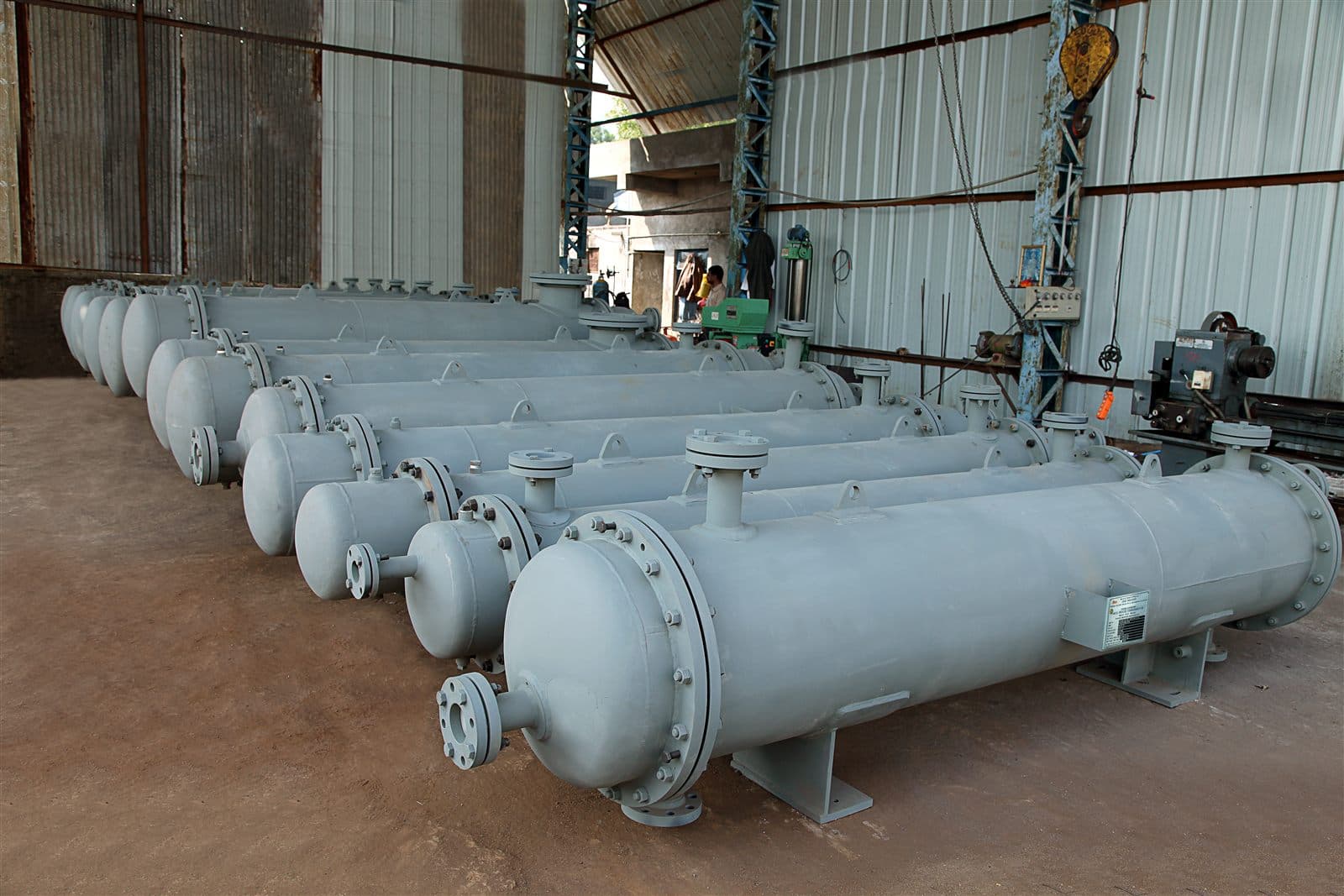
What this duty is
A cooler is sized so the hot stream leaves at or below a specified temperature. The cold side is usually cooling-tower water, chilled water, or a process coolant. Fouling on cooling-water tubes and allowable pressure drop on both sides dominate the mechanical layout.
Where it is used
- Product and recycle coolers after reactors or compressors
- Seal-oil, lube-oil and jacket-water coolers
- Intercoolers and aftercoolers when specified as shell-and-tube
- Utility return coolers
Typical services
Cooling-water coolersProcess-to-process coolersOil coolersClosed-loop jacket-water coolers
Engineering selection
- Put the fouling or high-pressure fluid where it can be cleaned or where the cheaper metallurgy can be isolated — state the preference on the RFQ.
- Cooling-water velocity and fouling factor must come from the plant water chemistry or the licensor; we do not invent undocumented fouling factors.
- Approach temperature to the cooling-water inlet sets area. Close approaches need more area or series shells — confirm at enquiry.
- Mechanical tube cleaning favours a straight-tube exchanger with a removable channel cover.
Configurations Ohm manufactures for this duty
Shell & TubeStandard industrial cooler construction.U-TubeWhen the bundle must come out for shell-side cleaning.Double-PipeSmall coolers and high-pressure inner-pipe duties.
Industries that specify this duty
Sectors — not named customers.
What to send with the RFQ
- Hot-side fluid, flow, inlet and required outlet temperature
- Coolant identity, flow or allowable rise, inlet temperature
- Fouling factors if the plant standard names them
- Allowable pressure drop, materials, quantity, delivery location
Related engineering guides
FAQ
- What heat exchanger types does Ohm use for process cooling?
- Configuration follows the duty. Typical starting points are Shell & Tube, U-Tube, Double-Pipe. Send process data — we do not pick a catalogue SKU first.
- What information do you need to quote this duty?
- Hot-side fluid, flow, inlet and required outlet temperature; Coolant identity, flow or allowable rise, inlet temperature; Fouling factors if the plant standard names them; Allowable pressure drop, materials, quantity, delivery location.
Technical RFQ — Process Cooling
Upload a datasheet or drawing if you have one. This is an engineering enquiry, not a retail price request.
WHAT HAPPENS NEXT
- We receive your enquiry and reply by email.
- If a quote needs process data, we ask for the missing fields.
- A technical and commercial response follows when the case supports it.