
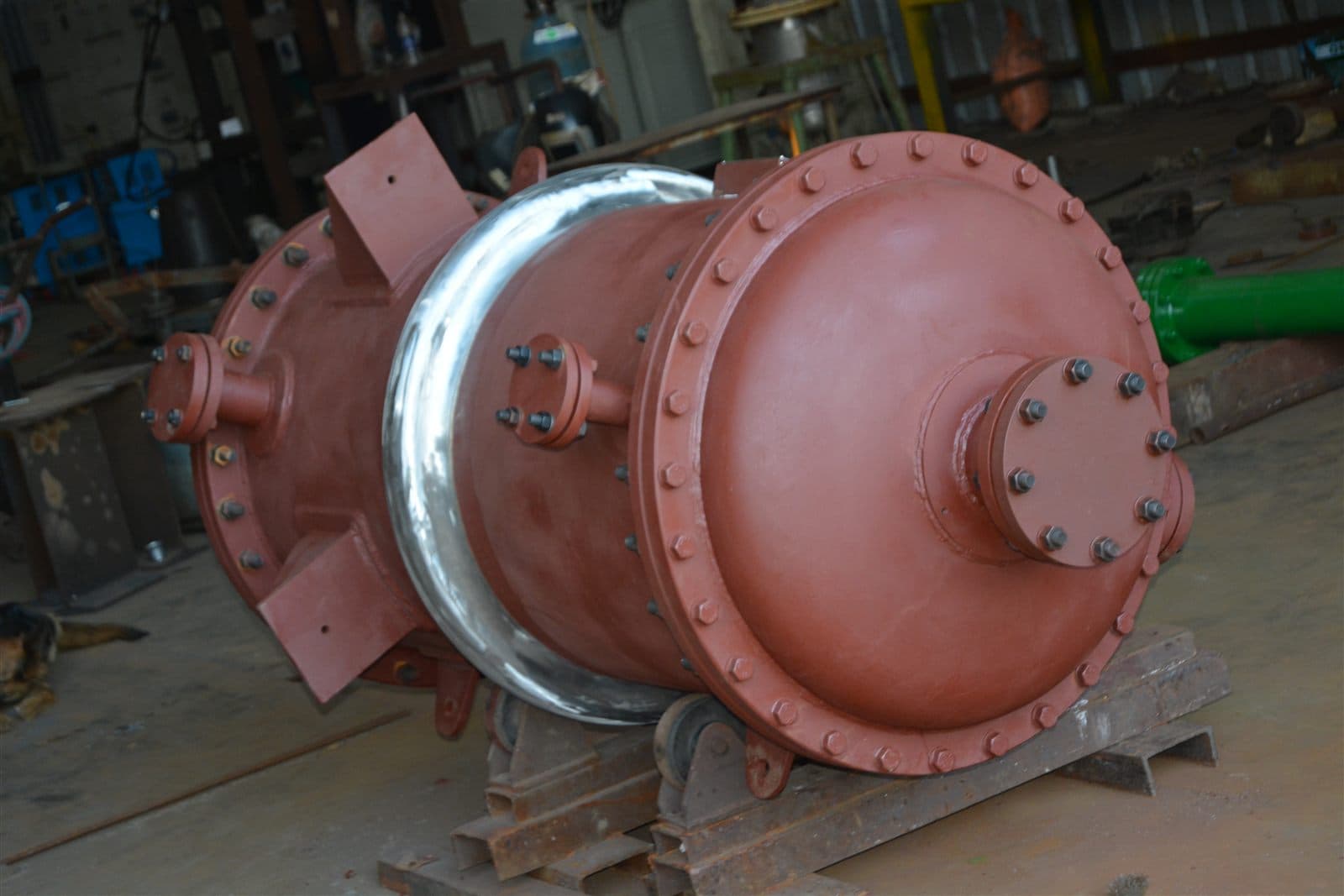
What this duty is
A condenser must remove both latent heat and any remaining sensible heat, and it must drain condensate without flooding the tube field. Non-condensable gases, if present, need a vent path. Underspecifying NCG load is a common cause of poor vacuum or high outlet temperature.
Where it is used
- Distillation and solvent-recovery overhead condensers
- Reactor vent and vapour condensers
- Vacuum-system intercondensers and aftercondensers when specified as surface condensers
- Steam condensers on process (not utility turbine) services when a shell-and-tube unit is specified
Typical services
Total condensersPartial condensersReflux condensers (when specified as a process exchanger)Solvent vapour condensers
Engineering selection
- Send vapour composition, condensing curve or bubble/dew data, operating pressure, and NCG estimate. A single ‘steam condenser’ label is not enough.
- Coolant inlet temperature sets the approach. Vacuum condensers are sensitive to cooling-water temperature and air leakage.
- Kettle-type geometry is for boiling/disengagement — not the default for overhead condensation. Overhead condensers are usually shell-and-tube with the vapour on the shell or tube side as specified.
- Ohm does not publish a catalogue vacuum or area rating for condensers.
Configurations Ohm manufactures for this duty
Shell & TubePrimary condenser construction.U-TubeWhen thermal expansion or bundle withdrawal is required.Double-PipeSmall vapour loads.
Industries that specify this duty
Sectors — not named customers.
What to send with the RFQ
- Vapour identity, flow, condensing pressure and temperature (or curve)
- Non-condensable gas load if known
- Coolant data and allowable ΔP
- Whether the unit is an overhead, vent, or vacuum inter/after condenser
Related engineering guides
- How Does a Shell & Tube Heat Exchanger Work? →
- Heat Exchanger Design Considerations →
- Heat Exchangers for Chemical Processing →
FAQ
- What heat exchanger types does Ohm use for condensation?
- Configuration follows the duty. Typical starting points are Shell & Tube, U-Tube, Double-Pipe. Send process data — we do not pick a catalogue SKU first.
- What information do you need to quote this duty?
- Vapour identity, flow, condensing pressure and temperature (or curve); Non-condensable gas load if known; Coolant data and allowable ΔP; Whether the unit is an overhead, vent, or vacuum inter/after condenser.
Technical RFQ — Condensation
Upload a datasheet or drawing if you have one. This is an engineering enquiry, not a retail price request.
WHAT HAPPENS NEXT
- We receive your enquiry and reply by email.
- If a quote needs process data, we ask for the missing fields.
- A technical and commercial response follows when the case supports it.